
Reviews
Sky Bird Journey Arcade is a straightforward reflex game built around a single tap control and an endless obstacle course. Its strongest asset is the real-time visibility of other players, which adds a social benchmark without complicating the rules. The lack of registration and device-agnostic controls make it easy to start. The limitation is depth: the entire experience rests on timing one input, so players seeking varied mechanics or progression systems will find it thin. It suits casual players who enjoy chasing a personal best in short bursts.
About this game
What You Actually Do
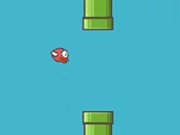
Sky Bird Journey Arcade strips the flying game down to one repeated action: tap or click to make the bird flap upward, then release to let it descend. The challenge comes from timing those taps so the bird passes through gaps between obstacles. The run ends the moment the bird touches a barrier or the ground. Each gap you clear adds to your score, and the course keeps generating new obstacles, so no two sessions follow the same pattern. [IMG_1]
Real-Time Presence of Other Players
The feature that separates this from a standard one-button arcade game is visibility of other players mid-flight. You can watch their birds and see their scores while you fly your own run. That turns a solitary reflex test into something closer to a shared arcade cabinet, where someone else's progress gives you a benchmark to chase. It does not change the controls or the rules, but it does change how a failed run feels.
Controls and Device Fit
One input covers everything. On desktop, a mouse click flaps the bird; on mobile, a screen tap does the same. There is no registration step, no tutorial gate, and no setup beyond opening the game. That low barrier is the point: the skill ceiling comes from rhythm and gap-reading rather than from learning a control scheme. [IMG_2]
Reading the Course Instead of Mashing
New players tend to tap too quickly, which sends the bird too high and makes the next gap harder to hit. A steadier rhythm works better. Watch the spacing between obstacles before you reach them, and adjust your tap frequency rather than reacting late. Frustration is the main cause of repeated mistakes here, so a calm, consistent run usually beats an aggressive one. Aim to beat your previous best distance rather than chasing an immediate high score.
Editorial Notes
✅ Compatibility & Testing
• Desktop (Windows 11, macOS Ventura)
• Mobile (iPhone 14, Samsung Galaxy S23)
• Tablet (iPad Pro, Android tablet)
✅Supported browsers: Chrome, Safari, Edge, Firefox (latest versions)
❌ Not supported: Internet Explorer, older browser versions
Faq
Is Sky Bird Journey Arcade free to play, and do I need an account?
The game is free and requires no registration. You open it and start flying immediately. There is no sign-up wall, no profile creation, and no login step before your first run. That makes it easy to try on a whim, whether you are on a desktop browser or a phone.
What happens when I hit an obstacle in Sky Bird Journey Arcade?
The run ends as soon as the bird touches a barrier or the ground. Your score for that attempt stops at whatever you accumulated by clearing gaps. You then start a fresh run, and because the obstacle course is endless and regenerated, the next attempt will not repeat the same layout.
Can I see other players while I am flying in Sky Bird Journey Arcade?
Yes. The game shows other players flying at the same time, along with their scores and progress. This is a visibility feature rather than direct competition, so you are not racing head-to-head. It simply gives you a live reference point for how your run compares to others in the moment.
Does Sky Bird Journey Arcade work on phones and tablets?
It works on both desktop and mobile devices. The control is a single tap or click, which translates naturally to touchscreens. There are no complex inputs that would favor a keyboard or mouse, so the experience is consistent whether you play on a computer, phone, or tablet.
Is there a way to practice specific obstacle patterns in Sky Bird Journey Arcade?
No. The obstacle course is endless and each session is unique, so you cannot select or replay a specific pattern. Practice means repeated runs and getting a feel for gap timing. Observing other players mid-flight can also reveal how they handle spacing, which is the closest thing to studying a pattern.
What is the best way to improve my distance in Sky Bird Journey Arcade?
Focus on a steady tapping rhythm rather than fast repeated taps. Tapping too quickly lifts the bird too high, making the next gap awkward to reach. Stay calm, watch the spacing ahead, and aim for consistent progress instead of an immediate high score. Patience tends to produce longer runs than frantic input.








Comments
0 comments