
Reviews
Casual Cooking Challenge targets players who enjoy quick, order-based kitchen tasks. Its strength is the balance between simple controls and the multitasking demand of watching multiple cooking stations. Solo practice helps, but multiplayer co-op and competitive modes are where the game adds social tension. The main limitation is that the concept stays within the time-management cooking genre, so players seeking story or deep progression may find it narrow.
About this game
Kitchen Station Management
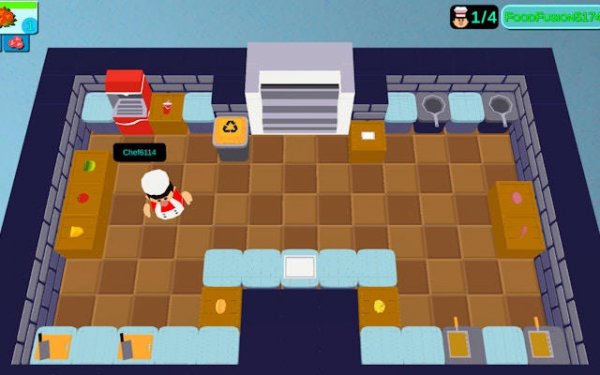
In Casual Cooking Challenge, you take control of a cooking station in a busy restaurant kitchen. Each round begins with station selection, and your job is to turn raw ingredients into finished dishes. That means chopping vegetables, grilling meats, and frying potatoes in the correct sequence. On-screen prompts guide the order of tasks, but speed matters: every dish has a timer, and late plates cost you points. The challenge comes from juggling several orders at once without letting anything burn.
Order Flow and Timing
Orders arrive with individual countdown timers, so you must decide what to cook first. Burning food is the fastest way to lose points, which forces you to watch active grill and fryer slots while still prepping new ingredients. Accuracy and speed both feed into your score, and higher scores come from serving dishes quickly and correctly. The game mixes quick reflexes with light planning, since the order you start tasks in often matters as much as how fast you tap.
Multiplayer and Solo Play
Casual Cooking Challenge supports both solo practice and multiplayer matches. In cooperative play, you and other players share a kitchen and can split tasks or coordinate on larger orders. Competitive matches turn the same kitchen into a race, with each player trying to serve more meals without burning anything. The social layer adds pressure that solo play does not, because you are reacting to other people's pace and choices in real time.
Controls and Accessibility
The controls are simple enough for new players to start quickly, but the flow of multiple orders takes practice to master. That gap between easy input and demanding multitasking is the core of the game's appeal. Short sessions work well, and longer competitive streaks are possible for players who want to push their speed and precision further. The result is a casual game that stays approachable while still offering depth for those chasing higher scores.
Editorial Notes
Compatibility
Play on Any Device | Chrome / Safari / Edge Recommended
Faq
Can I play Casual Cooking Challenge without competing against others?
Yes. The game includes a solo mode for practice, where you manage a station on your own. This is useful for learning the order of tasks for each dish and getting comfortable with the timers before joining multiplayer matches.
What happens if I burn food in Casual Cooking Challenge?
Burning food damages your score. The game tracks cooking items on grills and fryers, and leaving them too long ruins the dish. You then have to discard or redo the item, which wastes time and can cause you to miss the order deadline.
Does Casual Cooking Challenge have cooperative multiplayer?
Yes. The game supports cooperative multiplayer, where players work together in the same kitchen. You can divide tasks, such as one player chopping while another grills, to handle more orders than a single player could manage alone.
Is Casual Cooking Challenge easy for beginners?
The controls are simple, so beginners can start quickly. However, managing multiple orders and watching cooking timers takes practice. The game gradually increases the complexity of orders, giving new players room to improve without being overwhelmed immediately.
How does scoring work in Casual Cooking Challenge?
Scoring rewards both speed and accuracy. Serving a dish before its timer expires earns points, while faster service and correct preparation increase the score further. Burning food or missing orders reduces your total, so consistent performance matters more than occasional fast serves.
Can I play Casual Cooking Challenge in short sessions?
Yes. Rounds are designed to fit short play sessions. You can complete a few orders or a single match in a brief sitting. For players who want longer sessions, competitive streaks and multiplayer matches allow extended play without changing the core format.








Comments
0 comments