
Reviews
Sky Dragon Journey Arcade keeps its scope narrow: steer a dragon, time launches from rotating cannons, and reach each stage's end. That focus works well for short sessions and younger players, since controls stay simple and visuals stay bright. The difficulty comes from tightening launch windows and added obstacles, not from new mechanics. Players who enjoy rhythm-based precision will find a clear challenge; those seeking combat or free exploration should look elsewhere.
About this game
Launching Between Rotating Cannons
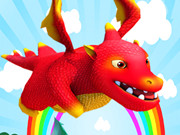
In Sky Dragon Journey Arcade, you control a dragon gliding through open air. Your goal is to reach the end of each stage by steering toward rotating cannons that fling the dragon to the next section. Miss the timing, and the dragon falls instead of launching. The whole game hinges on that single interaction: position, wait for the cannon's rotation, and fire at the right moment.
Controls and Moment-to-Moment Play
Inputs stay simple. A mouse or touchscreen moves the dragon, and the same basic control scheme carries through every stage. That simplicity keeps attention on timing rather than complex commands. As stages progress, new obstacles appear that demand faster recognition and cleaner steering. The challenge comes from reading the cannon's rotation and committing to a launch before the window closes.
Difficulty Curve and Audience
Early stages teach the rhythm of rotating cannons with forgiving spacing. Later stages tighten the timing and add obstacles that punish hesitation. Because the mechanics are easy to understand, younger players and arcade newcomers can start quickly, while the precision requirement gives experienced players something to refine. The bright visuals and family-friendly presentation match that broad appeal.
Building Consistency
Progress depends less on raw speed and more on steady rhythm. Watching a cannon complete a rotation before moving into range helps avoid rushed launches. Misses are informative: each failed attempt shows whether the dragon was too early, too late, or misaligned. Players who treat each stage as a timing puzzle rather than a race tend to see fewer falls.
Editorial Notes
Compatibility
▸ Desktop: Chrome / Edge / Firefox / Safari
▸ Mobile: iOS Safari / Android Chrome
▸ Tablet: iPadOS Safari / Android Tablet Browser
Keep your browser updated for the best experience
Faq
What type of game is Sky Dragon Journey Arcade?
It is an arcade-style flying adventure built around precision and skill. You guide a dragon through stages by launching from rotating cannons. The game emphasizes timing and quick reactions rather than combat or exploration. Its simple controls and bright visuals make it accessible to a wide range of players, including younger audiences.
What happens if I miss a cannon in Sky Dragon Journey Arcade?
Missing the cannon's launch window causes the dragon to fall, and you must retry the section. There is no penalty beyond restarting the attempt, so the game encourages learning from each miss. Paying attention to the cannon's rotation speed helps you avoid repeating the same timing error.
Is Sky Dragon Journey Arcade suitable for kids?
Yes. The game is designed with family-friendly visuals and straightforward controls. There is no combat, graphic content, or complex menu system. The main challenge is timing, which younger players can develop through practice. The gentle difficulty ramp in early stages helps children learn the mechanic without frustration.
How do I improve my timing in Sky Dragon Journey Arcade?
Focus on the cannon's rotation pattern before moving into range. Launch when the cannon faces the direction you need, not as soon as you arrive. Practicing the same stage repeatedly builds a feel for the rhythm. Rushing usually leads to mistimed launches, so steady observation matters more than speed.
Does Sky Dragon Journey Arcade have multiplayer or online features?
The game is described as an online adventure, but the core experience is a single-player flying challenge. There is no indication of multiplayer modes, leaderboards, or cooperative play. Players progress through stages individually by mastering the rotating cannon mechanic.
What makes Sky Dragon Journey Arcade different from other flying games?
The rotating cannon launch system is the defining feature. Instead of free flight or combat, you depend on timed launches from moving cannons to advance. That single mechanic creates a precision-focused arcade experience. The game's difficulty comes from reading rotation patterns and committing to launches, not from enemies or complex controls.








Comments
0 comments