
Reviews
Frontline Guardian succeeds by focusing on the core tension of resource allocation under pressure. The upgrade system offers meaningful choices without overwhelming complexity, and the wave variety ensures no two runs feel identical. Visual clarity and responsive controls support fast decision-making. While it lacks online features, the replay value from mastering different enemy compositions is strong. A solid choice for fans of tactical browser games.
About this game
Strategic Positioning
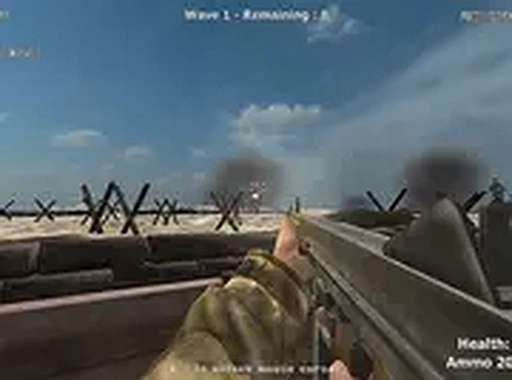
Frontline Guardian: Tactical Hold places you in charge of a key defensive point. Your primary objective is to slow the advance of incoming groups while your own forces pull back to safety. The game's core loop revolves around assessing each new threat and deciding where to focus your efforts. Unlike some tower defense titles that rely on static placements, this experience demands constant repositioning of your attention as enemies approach from different angles. The battlefield is straightforward, but the variety in enemy types keeps each round feeling fresh. You will need to read the flow of combat and adapt on the fly.
Resource Economy
Success in Frontline Guardian depends on how well you manage the currency earned from repelling attacks. Every defeated opponent contributes to your funds, which can then be spent in the shop between waves. The shop offers a selection of upgrades and new equipment, but you must prioritize carefully. Investing too heavily early on may leave you without enough firepower for later surges. Conversely, hoarding resources can lead to being overwhelmed before you have a chance to spend them. This balancing act forms the heart of the strategic challenge, rewarding players who plan several waves ahead.
Wave Composition
The game introduces enemies in escalating patterns. Early waves might feature slow, straightforward opponents that allow you to test your setup. As you progress, you will encounter faster units, groups that move in coordinated clusters, and tougher individuals that require sustained attention. The pacing is designed to give you breathing room to learn, then steadily increase pressure. No two play sessions unfold identically because the mix of enemy types changes each time. This variety encourages you to experiment with different upgrade paths and tactical approaches rather than relying on a single winning formula.
Upgrade Paths
The upgrade system in Frontline Guardian offers multiple ways to strengthen your defenses. You can enhance the power of your primary tool, increase its rate of use, or unlock special abilities that provide temporary advantages. Each upgrade branch has trade-offs. For example, boosting raw damage might reduce your ability to handle fast-moving targets, while improving speed could leave you struggling against heavily armored foes. The shop does not force a single optimal build, so you are free to tailor your loadout to your personal play style. Experimentation is encouraged, and resetting your choices is possible between runs.
Visual Feedback
The game uses clear visual cues to communicate important information. Enemy health bars, resource counters, and upgrade icons are all designed to be read at a glance. The color palette is muted but functional, ensuring that critical elements stand out against the background. Animations are smooth and responsive, providing immediate feedback when you land a hit or when an enemy breaks through. This clarity helps you make split-second decisions without confusion, which is essential as the pace quickens in later waves. The full-screen mode further enhances visibility, removing browser distractions for a more immersive session.
Replay Value
Because each run presents a different sequence of enemy compositions, Frontline Guardian encourages repeated attempts. You will find yourself refining your strategy after every defeat, learning which upgrades work best against specific combinations. The game does not rely on random chance to create difficulty; instead, it tests your ability to adapt to new information. Over time, you develop a deeper understanding of the timing and resource management required to survive longer. This gradual mastery is satisfying and gives the experience lasting appeal beyond the first few plays.
Compatibility
✅ Works on PC & Mobile | Recommended: Chrome / Safari / Edge
Faq
Is Frontline Guardian: Tactical Hold free to play?
Yes, the game is completely free and runs directly in a standard web browser. There are no downloads or installations required. You can start playing immediately on any desktop computer with an internet connection.
What kind of upgrades are available in the shop?
The shop offers upgrades that improve your primary tool's damage, speed, and special abilities. You can also unlock new equipment that changes how you engage enemies. Each upgrade path has distinct advantages, so you can customize your loadout to match your preferred tactics.
Does the game have a tutorial or instructions for new players?
Frontline Guardian includes a brief introduction that explains the basic controls and objectives. The early waves are designed to be forgiving, allowing you to learn the mechanics at your own pace. More advanced strategies become apparent as you encounter tougher enemy combinations.
Can I play this game on a mobile device or tablet?
The game is optimized for desktop browsers and may not function properly on mobile screens. It supports full-screen mode on computers for a more focused experience. Mobile compatibility is not guaranteed, so a desktop or laptop is recommended.
How long does a typical game session last?
Session length varies depending on your skill and the difficulty of the waves. A single run can last anywhere from a few minutes to over half an hour. Because each attempt is different, you can enjoy short sessions or longer play periods as your schedule allows.
Are there any leaderboards or ways to compare scores with others?
The current version of Frontline Guardian does not include online leaderboards. Your progress is tracked locally, and you can challenge yourself to beat your own best performance. The focus is on personal improvement and mastering the game's strategic elements.





Comments
0 comments