
Reviews
Tire Shift: Obstacle Driving succeeds by building an entire game around one interaction: changing wheel size to match the terrain. That constraint keeps controls simple and feedback clear, while the time limit adds pressure without requiring complex inputs. The progression from simple obstacle combinations to rapid multi-switch sections feels natural. Players who enjoy spatial puzzles and reflex-based driving challenges will find lasting appeal, though those seeking deep vehicle customization or multiplayer should look elsewhere.
About this game
The Wheel-Size Mechanic
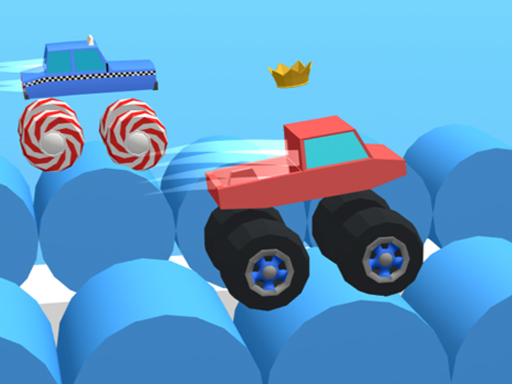
Tire Shift: Obstacle Driving is built on a single, clever interaction: the player can instantly enlarge or shrink the vehicle's wheels. This is not a cosmetic upgrade. Wheel size directly determines how the car interacts with the environment. Large wheels provide the clearance to roll over substantial barriers, while small wheels let the vehicle slip through narrow passages. The challenge is not controlling the car so much as reading the terrain ahead and making the right adjustment at the right moment.
Course Structure and Difficulty Curve
Each course is a spatial puzzle. Early stages introduce the mechanic with simple combinations of high and low obstacles, giving players room to learn the relationship between wheel size and clearance. Later levels increase complexity, requiring multiple wheel-size switches within a short stretch of road. A time limit adds pressure and pushes drivers to find the most efficient path through each section. The progression builds naturally, with each new challenge relying on skills learned in previous stages.
Controls and Feedback
Two control schemes are available. On a computer, the keyboard handles steering and wheel-size adjustment. On mobile devices, touch controls provide the same functionality. Both are responsive, which matters when a course demands quick changes. The interface is clean, and clear visual feedback shows the current wheel size at all times. This makes the game approachable even for players who do not usually play driving games.
Visuals, Audio, and Strategic Depth
The 3D graphics present a variety of terrains, from dusty rocky paths to sleek urban environments. Each setting has its own color palette and lighting, helping distinguish level themes. Obstacles are clearly shaped and sized so players can plan their approach. Engine noises and environmental effects change based on wheel size and surface. While controls are simple, mastery requires anticipation: sometimes staying small and weaving through gaps is best, other times a quick enlargement clears a sudden barrier. The time limit prevents overthinking and forces commitment, giving each level multiple viable approaches.
Editorial Notes
Compatibility
✅ This game supports:
- Desktop browsers (Chrome, Edge, Safari)
- Mobile browsers (Chrome on Android, Safari on iOS)
❌ Does NOT support: - Internet Explorer - Very old browser versions
👉 Try refreshing or updating your browser
Faq
Does Tire Shift: Obstacle Driving require precise timing or can I plan ahead?
Both. The game rewards reading the terrain ahead and deciding whether to maintain or change wheel size. However, the time limit prevents overthinking, so quick reflexes matter too. Success comes from a blend of thoughtful planning and fast adjustment, especially in later levels where multiple switches happen in a short stretch.
Can I play Tire Shift: Obstacle Driving on a phone?
Yes. The game offers two control schemes: keyboard on computer and touch controls on mobile devices. Both provide the same functionality for steering and adjusting wheel size. The touch controls are designed to be responsive, which is essential for the more demanding courses where quick changes are required.
Is there a time limit in every level of Tire Shift: Obstacle Driving?
Based on the game's design, a time limit adds pressure across courses. It encourages drivers to find the most efficient path through each section rather than experimenting indefinitely. This structure keeps the experience engaging without overwhelming newcomers, as early stages introduce the mechanic before later levels increase complexity.
What makes Tire Shift: Obstacle Driving different from other driving games?
The defining difference is the instant wheel-size adjustment. Instead of only steering and accelerating, players change how the vehicle physically interacts with obstacles. Large wheels clear tall barriers; small wheels fit through narrow gaps. This turns each course into a spatial puzzle where the right adjustment matters as much as driving skill.
Are the levels in Tire Shift: Obstacle Driving all similar or do they vary?
Levels vary in theme and complexity. The 3D graphics present terrains ranging from dusty rocky paths to sleek urban environments, each with its own color palette and lighting. Early stages use simple obstacle combinations, while later levels require multiple wheel-size switches within a short stretch of road.
Does Tire Shift: Obstacle Driving have a multiplayer mode?
The provided information does not mention multiplayer or online modes. The game is described as a single-player skill game focused on navigating obstacle courses by adjusting wheel size. For any multiplayer features, check the official store page or developer updates, as this description is based only on the core gameplay details available.







Comments
0 comments