
Reviews
Flag Match Memory Game does one thing well: it pairs a familiar concentration mechanic with real national flags. The three difficulty settings adjust grid size, and the absence of a timer keeps the pace comfortable for children and adults. Random layouts prevent memorized solutions. The main limitation is scope—this is a focused memory exercise, not a broader geography tool. It suits casual players, families, and anyone wanting a low-pressure brain-training break.
About this game
Matching Flags, Training Recall
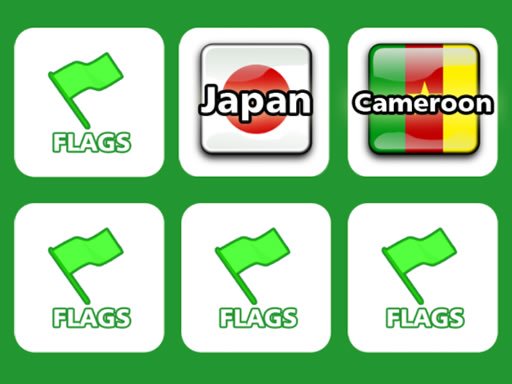
Flag Match Memory Game turns a classic concentration-style puzzle into a light geography exercise. A grid of face-down cards hides flags from different countries. Your task is to flip two cards at a time and find identical pairs. Because the layout is randomized each round, you cannot rely on memorized positions from a previous game. The result is a simple loop: observe, remember, and match.
Three Grid Sizes, One Calm Pace
The game offers Easy, Normal, and Hard settings. These change the size of the grid and the total number of cards, which directly affects how much information you need to hold in mind. There is no timer, so you can pause and think before each selection. That design choice makes the game suitable for children and adults who prefer a low-pressure challenge. A round ends only when every pair has been matched.
How a Turn Works
Click any card to flip it and reveal its flag. Then click a second card. If the two flags match, both stay face up. If they differ, both turn back over after a short pause. The pause is the core memory test: you must recall where each non-matching flag was so you can pair it later. Fewer wrong flips mean a faster, cleaner finish. The game runs directly in a browser on computers, tablets, and phones.
What You Actually Learn
Each card shows a national flag, so repeated play exposes you to real flag designs and their distinguishing features. The educational value comes from that exposure rather than from quizzes or labels. Players who pay attention to color patterns, stripes, and symbols tend to improve both their matching speed and their flag recognition. The clean, straightforward visuals keep attention on the flags themselves.
Practical Tips for Better Runs
Start on Easy to learn the gameplay rhythm and a small set of flags. Say the flag's colors or pattern silently as you flip it; verbal cues often stick better than raw positions. Avoid clicking quickly just to clear the board. Taking one extra second before each second flip reduces mismatches. With regular practice, recall of card locations improves naturally.
Editorial Notes
Compatibility
Play on Any Device | Chrome / Safari / Edge Recommended
Faq
Is Flag Match Memory Game free to play?
Yes. The game is described as completely free, with no advertisements and no in-app purchases. You can play it directly in a web browser without downloading or installing anything. That means no account, no payment, and no interruptions during a round.
What do the Easy, Normal, and Hard settings change?
They change the size of the card grid and the total number of cards. A larger grid means more flags to track and a longer round. Easy is the best starting point for learning the gameplay and a smaller set of flags before moving to Normal or Hard.
Is there a timer or a move limit?
No. The game has no timer, so you can think carefully before each selection. There is also no stated move limit. A round ends when all pairs have been matched. This makes the game suitable for players who prefer a calm, self-paced challenge rather than time pressure.
Can young children play this game?
Yes. The game is designed for children and adults alike, with a simple click-to-flip mechanic and no reading-heavy instructions. The flags themselves provide a gentle introduction to world geography. Easy difficulty is the most appropriate starting point for younger players.
Does Flag Match Memory Game work on phones and tablets?
Yes. The game is described as playable on computers, tablets, and phones through a web browser. The visual design is clean and straightforward, which helps it remain usable on smaller screens. No separate app download is required.
Does the card layout stay the same between rounds?
No. Each new round is randomly arranged, so card positions differ every time. You cannot memorize a fixed layout and reuse it. That randomness is what keeps repeated play fresh and prevents the puzzle from becoming a simple pattern-recognition exercise.






Comments
0 comments